
Pastures
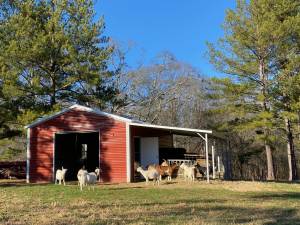
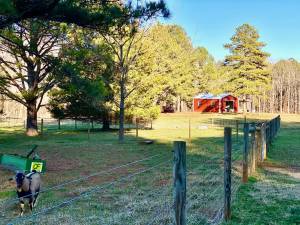
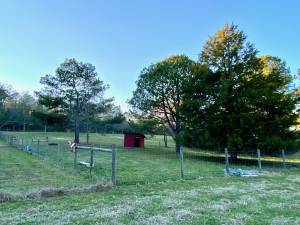
We have 3 pastures, each with an electric wire on top to keep the big adults safely inside. A breeding/quarantine mini-pasture separates our billy pasture and our large doe pasture. Each pasture has its own barn or shelter for the goats to escape inclement weather or rest as desired. We do not lock them inside at night. The doe’s may kid in their pasture but are brought into a barn stall for ease of monitoring, bonding, and safety for 24-48 hours. If a newborn kid happens to suckle off another doe before they are bonded to their mom, the real mom may reject them.
Fence Me In: Goat-Proof Fencing Done Right
Goats aren’t just livestock—they’re escape artists in hooves. If they can lean on it, climb it, wiggle under it, or chew through it, they will. That’s why your fencing needs to be sturdy, strategic, and smarter than your most stubborn doe.
Corner Bracing: Anchor It Like You Mean It
All tension starts and ends at the corners, so this is where you build like you’re fending off a rhino, not just a goat.
Use 5–6″ diameter pressure-treated wood posts, sunk 2.5 to 3 feet deep.
Place a second post 8 feet away, and connect the two with a 4″ diameter horizontal brace set at 42″ off the ground.
Add a diagonal high-tensile brace wire, anchored from the top of the corner post to the bottom of the brace post. Tighten it using a stick or tensioner.
Backfill with concrete or tamped crushed rock for a solid set.
If your brace wobbles, so will your whole fence. Goats love that.
Straight Runs: Metal T-Posts Every 10 Feet
Once your corners are in, it’s time to stretch things out.
Set 6.5′ T-posts every 10 feet, driven about 2 feet deep to leave 4.5′ above ground.
These hold your woven wire upright between braces without the cost of all wood posts.
Every 75 feet, install a line brace using the same H-brace setup as your corners.
This combo gives you strength, cost-efficiency, and adjustability for future tweaks (because goats will make you tweak things).
Fencing Material: 4″x4″x48″ Woven Wire
This is the goat-fencing gold standard.
Choose woven wire fencing with 4″x4″ spacing and 48″ height.
Keeps heads in, predators out, and horns from getting stuck (well… most of the time).
Stretch it tight with a fence stretcher or come-along, and staple it to wood posts using 1.5–2″ galvanized staples.
Secure to T-posts with standard wire clips.
For extra insurance, pin down or weigh the bottom edge to stop any crawl-unders.
Top Hot Wire: The Anti-Leaning Device
Goats love to lean. And climb. And test structural integrity with their heads. So give them a little persuasion.
Install one hot wire about 6″ above the top of your woven wire.
Use 14- or 12.5-gauge high-tensile wire with insulators.
Keep it tight and free of weeds, or you’ll lose voltage fast.
Gates: 4 to 14 Feet Wide—Choose Wisely
Your gate needs depend on how you plan to get in and out—on foot, with a feed bucket, or driving a tractor.
4–6′ gates are great for walk-through access or small equipment like UTVs or mowers.
8–14′ gates are ideal for livestock trailers, tractors, or hay deliveries.
Use the same 5–6″ wood posts for gate anchors, and brace them like a corner setup (with a 4″ brace and diagonal wire).
Always install a secure latch, and consider hot-wiring the top of the gate if your herd includes climbers or fence testers.
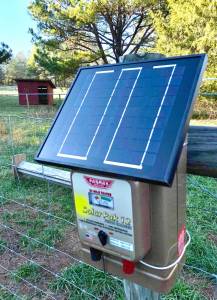
Solar Power: SunPac 12 Charger with 3+ Joules
A strong fence deserves strong voltage.
The SunPac 12 solar charger delivers at least 3 joules—plenty of zap for goats, coyotes, and the occasional curious dog.
Face it south in full sun, and mount it on a post away from shade or vegetation.
Ground it with three 6′ galvanized rods, spaced 10 feet apart, and connected by insulated ground wire.
Check with a voltage tester regularly—5,000+ volts is ideal.
Routine Maintenance: Because Goats Don’t Take Days Off
Inspect monthly: walk the line, clear weeds, check brace tension and electric function.
Keep spare clips, insulators, and fence staples on hand.
When in doubt, re-tighten. Goats love “loose.”
Shelters
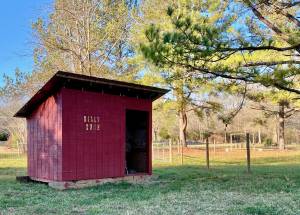
Our main barn is shelter for the girls and kids. You should plan on at least 20 square feet of shelter for each goat. An attached enclosed lean-to with a secure gate protects our Bermuda hay, round and square, minerals, and grain. We can not emphasis enough to keep your grain storage securely goat-proofed. Goats can literally eat themselves into a deadly bloat situation from over consumption of grain. The barn is also equipped with solar panel lighting… comes in handy during the shorter winter days and kidding season. The Billy Bunk is on skids and we can move it around when needed. The mini-pasture has a small Quonset hut. Auto-fill water troughs, along with hay and mineral feeders, are in each pasture.
At this time, we do not have any predator issues and won’t consider a guardian dog unless we experience losses.
When the hot weather comes so do the pesty flies. Besides keeping the barn as poop and urine free as possible, we hang a few disposable fly traps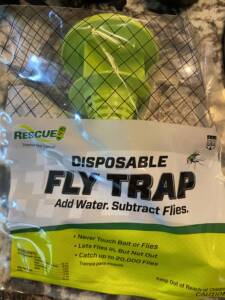 around that do a pretty good job at reducing the flies, literally traps 10s of thousands of them.
Scales
We have a VS-660 scale from A & A Scales. While you can get by starting out with a bathroom or pet scale, a good livestock scale makes life much easier. We weight kids within 24 hours of birth and at 30, 60, 90 days, and at 1year. We also spot check weight if we suspect parasites or illness as well as how recovery is doing. Most medication dosages vary by weight of the goat. DO NOT guess weight for dosages! A scale of some sort is a must have. We did purchased the double gated enclosure for the scale as well but DO NOT recommend it… there are sturdier and less expensive ways to enclose.
Heavy Equipment
We have a 40hp diesel Tym 4×4 front loader tractor as our main work horse. We have a bush hog, box blade, and a very important hay spear to move around big rolls which are much less expensive than bales. Our truck has a steak body and it serves as our hay transporter, goat hauler, and anything we need that is not on the farm hauler, lol.
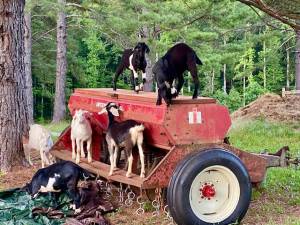
To seed the pastures, we have a 1970 International Harvester grain drill pulled by our tractor. The pasture is seeded the beginning of May with a Summer mix of legumes and grasses. In the beginning of October we plant our a Winter mixture of legumes, grasses, including Alfalfa. We fertilize the pastures twice a year just prior to seeding and lime the pastures once a year in the Spring.




Add Comment