
The recipe for good goat nutrition is affected by geography, farm condition, and desired out come. Our goat’s primary feed is browse, including legumes and grasses. Here is a good article on Sun Hemp that we seeded. We use a small bucket of grain daily for herd management and also use grain as a supplement during the winter and kidding season. We do a Spring and Fall seeding of the pastures with different mixes to maximize yields for the weather and provide a healthy variety for the goats to browse. Lastly, during kidding and hot months we add Livamol to their feed to reduce parasites on our pastures.
Livamol
This is something new we added to our pasture management in 2023. Let me preference this in that we do not post anything that we have not first used ourselves and assessed the benefits. Livamol with Bioworma is a high protein additive with a parasite consuming fungus. It looks like finely ground oregano. IMPORTANT: This does NOT kill parasites inside the goat! This product is mixed into their feed and the fungus feeds on the parasites in the goat dung as it lays on the ground. They advertise that up to 85% of the parasites are consumed by the fungus which in turn greatly reduces the parasite load on your pasture and goats. We have to agree.
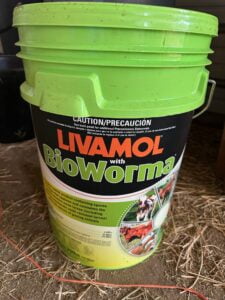
How did we assess? First, we began using the product at weaning time… will begin earlier next year when temperatures are consistently above 40 degrees. Our weaning paddock is relatively small, maybe 1/4 acre. We had up to 22 kids on the small pasture for 8-10 weeks which is a high load with potential for parasite issues. As a result, we did not have parasite problems and the condition of the kids: weight gain, shiny coats, overall health was simply outstanding.
We also added to the dams feed with similar results. Good recovery from kidding, healthy looking coats, and we random fecal tested a sampling of the herd and found parasite load nearly non-existent. We are in Georgia with 90’s and humid… not what we were expecting.
Hay
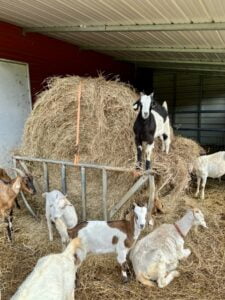
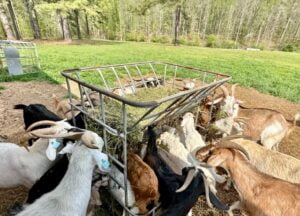
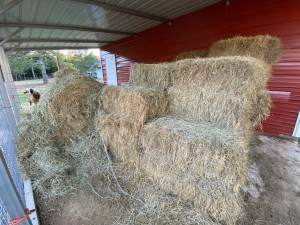
Fresh Bermuda hay is available 365 days a year but their consumption when the pasture is high is less. Goats needs hay in their diet for a healthy rumen. Try this hay calculator to estimate your monthly usage. From post-breeding through kid weaning, does receive about an 8″ chunk of an Alfalfa bale in a feeder to share. The bucks do not get Alfalfa. The calcium in Alfalfa can cause urinary problems with the boys if given too much. While does are nursing their kids, the Alfalfa is especially helpful in overall health and milk production.
Minerals
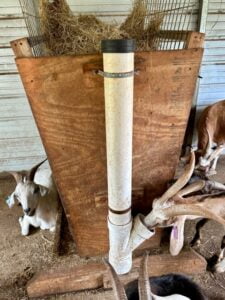
Free choice high-copper loose minerals are available in 4″ PVC feeders to our goats 24/7. Quality minerals are very important for overall goat nutrition and health. Copper deficiency is a problem in many parts of the country, especially here in the Piedmont Region of Georgia know for its red clay. The iron in the clay also retards copper absorption. Symptoms of a copper deficient goat is visible in a dull shaggy coat, not easily shedding their winter coat, and/or a tail with hair shaped like a fish tail (hair missing from the tip of the tail). A lack of copper also increases your challenge with parasites. We do not use salt or mineral blocks as we find them too hard for goats to get what they need.
To further address a goats need for copper, we copper bolus all our goats with 2 grams capsules for 25-50 lbs kids over 3 months of age and 4 gram capsules for everyone over 50 lbs. Copper Bolus is done twice a year, July and January. We use a high quality balling gun to give copper bolus, do not bother with the cheap plastic ones.
Grain
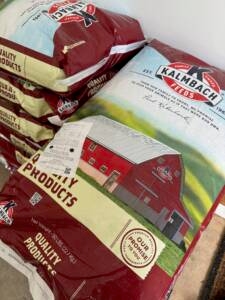
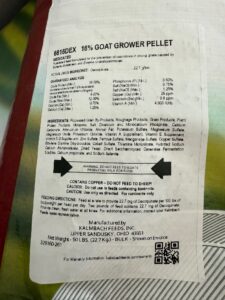
Unless you are blessed with an acre of excellent pasture and browse, you may want to add grain to their diet. Out goats daily grain ration is two cups per head. One or two cups of cracked corn mixed with their grain adds some extra carbs to fill them out. We spread feedings out over morning and afternoon, but you can get by with once a day. Our grain also consists of low-dose Cocci medication. We find that greatly reduces problems with kids who are more susceptible.
Grain is also great tool to enhance herd management as well as supplementing their diet. Goats come running if you are holding a grain bucket, most likely to mob and overpower you, laugh. Providing grain in late afternoon also encourages them to pasture graze during the day and promotes day-light kidding. Who loves to kid at 2am said no one. On the rare occasion when there is snow cover (maybe once a year, gotta love Georgia), we increase the daily grain to three cups per head in addition to the hay. A pocket full of Animal Crackers is a perfect inexpensive treat and will always create a mob of nibbling lips.
Water
Our well supplies multiple troughs with automatic filling floats that are cleaned regularly. Quality drinking water is extremely important… if I would not drink it, neither should the goats. On extremely hot days we put a little molasses in a couple water buckets for some refreshing goat hydration… they slurp it down. If desired, you can add some electrolytes to the molasses water for an improved pick me up. Yes we spoil our goats but the Alfalfa, grain, animal crackers, and molasses water all make for a very manageable and friendly herd.

Pregnant Does
While pregnant and nursing, goat nutrition is very important. Our pregnant does receive a morning grain ration which is identical to their normal afternoon graining (so double the normal). The extra feed continues until the kids are weaned. In addition, we give the pregnant does an 8″ chunk of alfalfa morning and afternoon. We also put out 50lb protein tubs inside the barn and tilt on its side to prevent being pooped on.
After our does kid, we wait until she has cleaned kids and they begin nursing. We then give the doe a bucket of molasses water and 2 cups of grain to re-hydrate and promote her milk coming in.
17% Goat Feed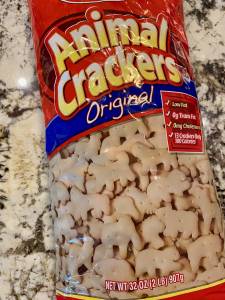






Add Comment