Starting a goat farm? Read this!
Where do you begin when starting a goat herd? Raising goats is a rewarding experience and the babies are way too cute. The list below will help you hit the ground running.
- 48″ 4″x4″ goat wire fence with electric top wire
- Shelters for goats
- Covered hay feeder
- Mineral feeder
- Grain troughs
- Fresh water supply
- Basic medicine and care items in stock
- Locate a veterinarian with goat experience
- Prepare to be amazed by these wonderful creatures
First… goats are escape artists, quality fencing with a minimum of two separate pastures, one for does and one for bucks. I strongly recommend at a minimum 48″ 4″x4″ goat wire fencing mounted on wood fence posts every 10′ or a combination of wood post bracing and metal t-posts. In ad dition, an electric top wire with a 2.9 joules rating. NOTE: Buy a fence charger based Joule rating, not on miles of coverage. If the fence separates does and buck, add fence fabric and an electric wire 18″ from the ground as well.
Temporary fencing equals temporary goat ownership… they will escape, you may never find them. Protect your investment!
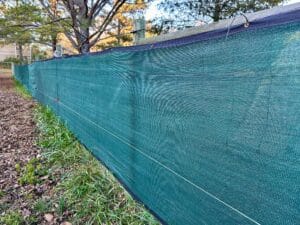
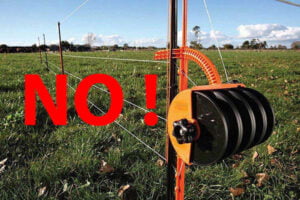
It is best if pasture grass or browse is 6″ or higher. Having an extra fenced pasture to rotate grazing every 4-5 days is a definite plus. Both will help reduce parasites for your herd. Check your pasture and fence line for toxic plants and trees such as Perilla Mint or any wild or cultivated Cherry Trees.
A fresh water supply and shelters for both pastures is a must. Goats hate to get wet. The shelter will keep the elements and wind off them in the winter and provide shade in summer heat.
Companionship is a must. Goats are herd animals and do not do well alone. I recommend a minimum of two girls and two bucks or a buck and a whether (neutered boy) so each have a buddy.
What to feed? Goats ne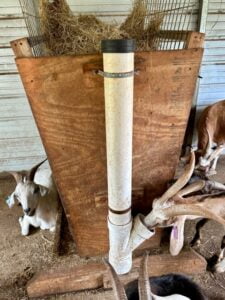 ed pasture and/or browse. Dry sheltered quality hay 24/7. Wet moldy hay WILL kill your goats! A high copper (2500+ cu if possible) free choice minerals 24/7, in 4″ PVC (Note: 3″ PVC does not work) dispenser to meet nutrition needs.
Grain (minimum of 16% crude protein, not Tractor Supply Sweet Feed), 1-2 cups per head per day unless you have acres and acres of good pasture.
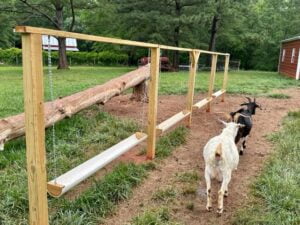 We like hanging grain feeders made from 6″ PVC cut in half lengthwise and hung from a treated wood frame.
Keeping them healthy… all goats have parasites (worms). You cannot eliminate them but instead you manage the load on the animal. Kiko’s are a sought-after parasite resistant breed but be aware the condition of their environment is 50% of keeping them healthy.
One of your most important pieces of equipment is a quality scale. ALL medicine dosages are based on the weight of the goat. You must have a good scale! The scale is also a good tool to measure your goats weight to confirm a gain (health improving) or loss (health declining). When kidding begins you will also need to record weights at birth, 30, 60, 90 days, wean weight. We like this scale but there are many options out there.
Most goat medications are “off label” meaning they are sold for other types of livestock. You do not have time to wait for a medication delivery if your goat is sick. Most big box supply houses will not carry what you need so be prepared to have a good local source or order online ahead of time. At a minimum you should keep in stock the following: Valbazen, Cydectin Oral Drench for Sheep, Prohibit/LevaMed, Scour-Chek, Probiotic Plus Paste, and Vitamin B Complex. I also recommend a small tube of EquiMAX or Zimecterin (1.87% Ivermectin, 14.03% praziquantel) to treat tape/round worm. Tape worm looks like rice in their poop.
Annually, you will need a vial of CD&T vaccination. Have a thermometer on hand to take your goats temperature if you suspect they are not feeling well. A low or high grade fever may require Penicillin(narrow spectrum) and/or Nuflor (broad spectrum) antibiotic. There are more medicines you will want to have on hand as your herd grows… these are your first must haves.
To deliver meds you will need three 10ml barrel syringes with 5 ½” drenching nozzles, one 20 ml barrel syringe with drenching nozzle, a box of 3ml Leurlock syringes with 20-gauge needles for the B Complex and CD&T vaccine. To mix the Prohibit (comes in powder form) you will also need a small gram scale and a few 50ml vials with lids.
If you will have a dozen or more adult goats and expect kidding, I suggest purchasing Nuflor antibiotic (will require prescription from a Vet), 18 gauge 6ml Luerlock syringes for Nuflor (thick liquid), Toltrazuril 5% to treat Coccidia (100ml bottle is fine to start), and Bamamine for pain/inflammation. If you are in a copper deficient area, I recommend a quality metal (do not get plastic) copper bolus applicator and both 2 gram (for kids) and 4 gram (for adults) capsules.
Kiko’s are awesome mothers and rarely need assistance. I would keep on hand powdered colostrum mix and a bottle with a couple nipples because need is time sensitive.
Buy a quality pair of hoof trimmers. You will need to keep their hooves in good condition. There are plenty of YouTube videos on how to trim goat hooves. A bottle of Hoof n Heal is handy as well to treat infected hooves.
Last but not least—I recommend the book Raising Kiko Goats to start you on your journey. Also, animal crackers—got to keep them happy and friendly!