
Welcome To Our Kiko Goats Farm!
New Zealand Kiko Goats for Sale
Our Farm
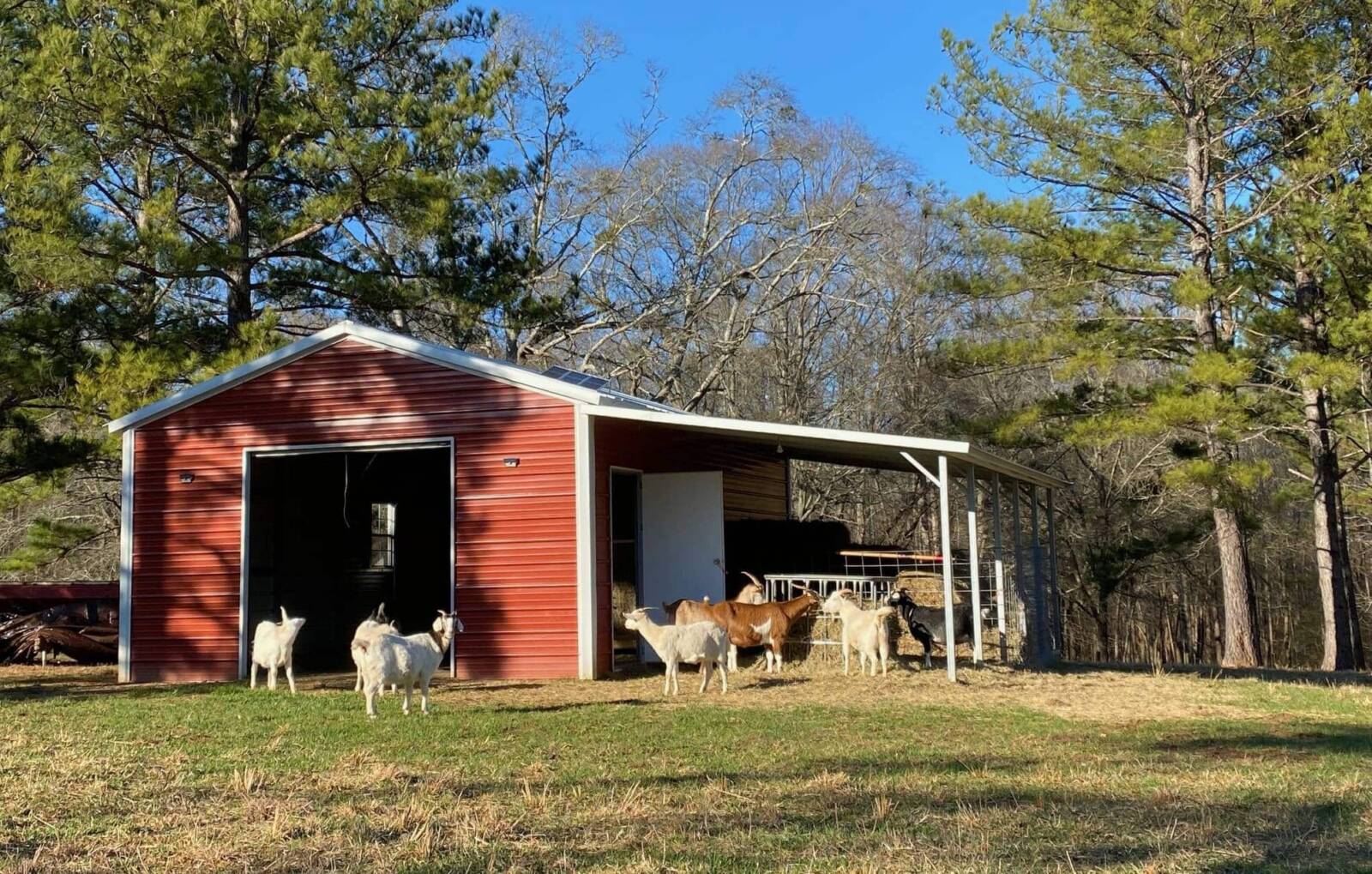
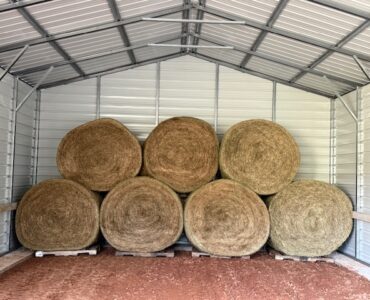
Nestled on a quiet Walton County dirt road in Good Hope, Georgia, our high quality Kiko Goats thrive on a natural food supply: grazing, hay, grain, and minerals. Separate pastures are maintained for bucks and does, with a few extra fenced paddocks for breeding, hay storage and special needs. To keep them safe from outsiders, we maintain electrified posts and wire fences (don’t tell them we are just trying to keep them in). New for 2026, a hay barn that can hold 63 round bales, no more tarps or ruined hay.
Goats are mischievous; therefore, we keep a goat first aid kit handy for bumps and cuts. Testing all goats for Johne’s, CAE, and CL ensures a healthy herd. Vaccinations include CD&T and worming for individual goats only when needed. We maintain a very healthy herd and, in turn, take many measures to keep it that way. Above all, we strive for continual improvement. Our latest pasture management includes no-till seeding with a mix of grains and legumes in the Spring and a different mix for the Fall. Healthy goats are happy goats!
Meet Our Goats
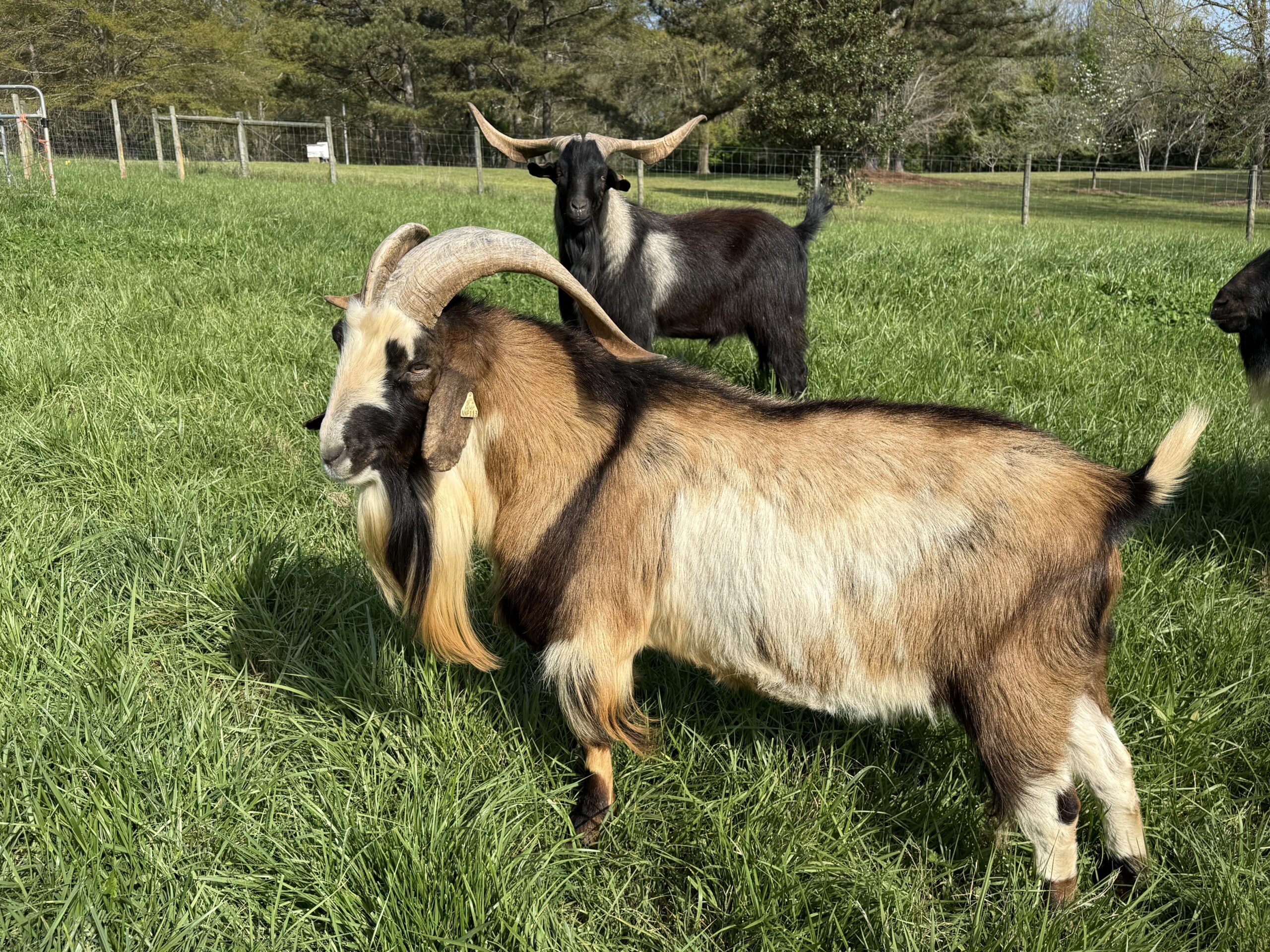
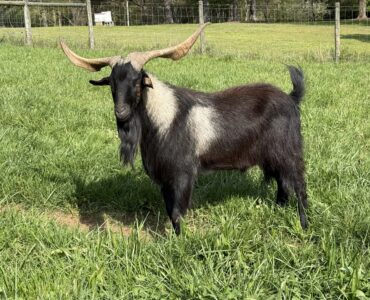
Our farm’s flagship is 100% New Zealand Kiko goats. Herd selection focuses on quality bloodlines, health, kidding, growth rates, and temperament. We ensure 100% purity of our line, coupled with NKR Registered and Parent DNA verification.
Pedigree Matters
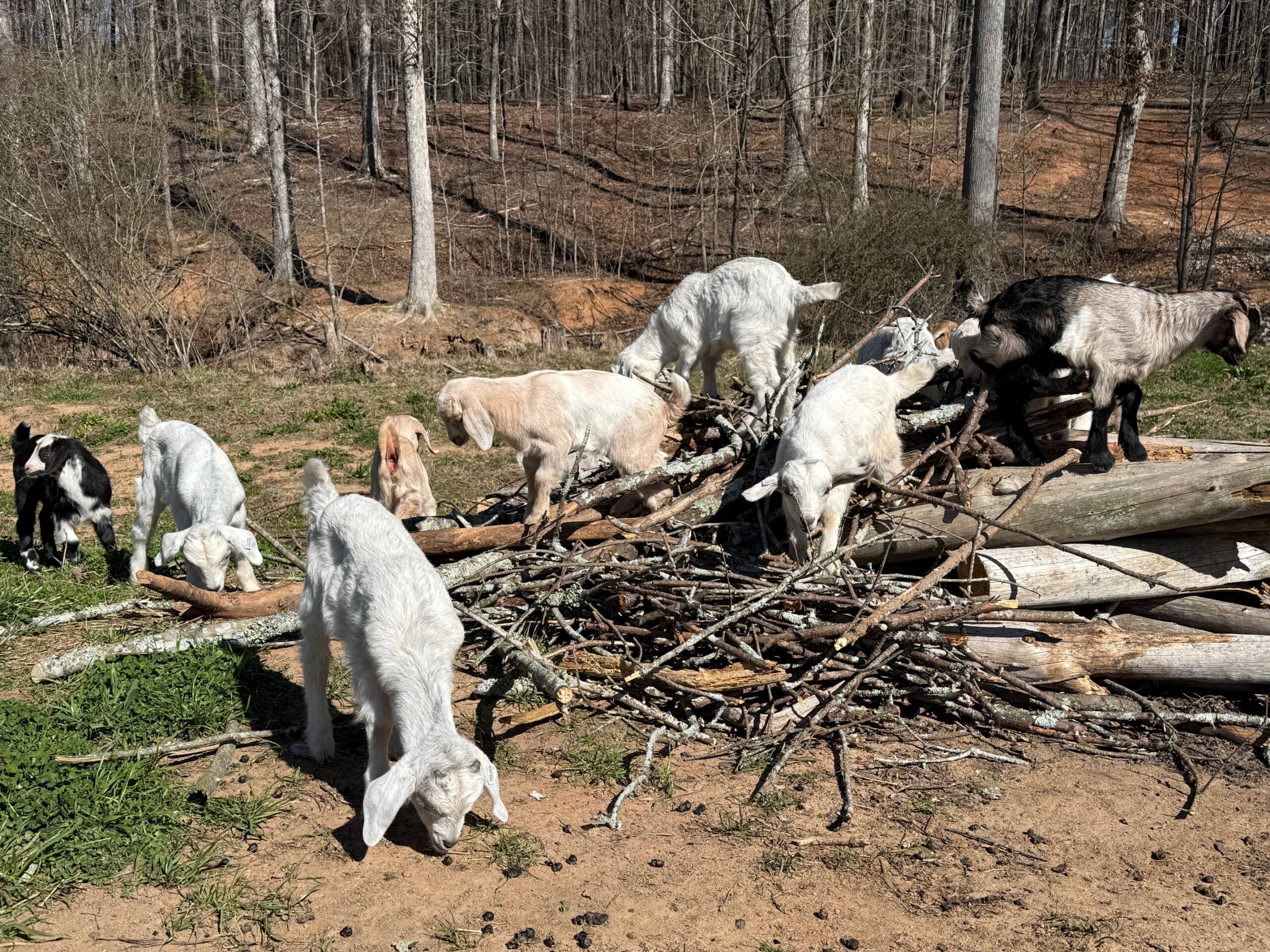
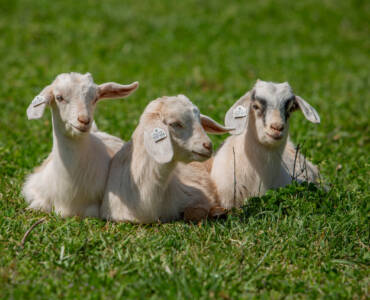
Onyx’s Jukka, a 2-year-old AI buck, a full son of the Famous Tay Onyx and half brother of equally notable Ironhorse did not disappoint in his first breeding season at the farm. He has some amazing kids. See all our new additions here.
The herd comes running for treats whenever we enter the pasture. They know their names and quickly poke their noses in my pockets, searching for Animal Crackers. Being generous with treats tames even the most unruly or wild goat. Furthermore, we provide a never-ending supply of Bahia Mix hay and free-choice minerals.
As a result of pampering and attention to detail, our herd receives the best possible care. If the temperature dips below 50 degrees, the rear barn door stays closed so they have a place out of the drafty wind. If it is raining, their grain is served up in the barn. If we are not available, our caretaker comes by to feed and pamper.
What's Happening

Nature’s Nook Farm is in Georgia.
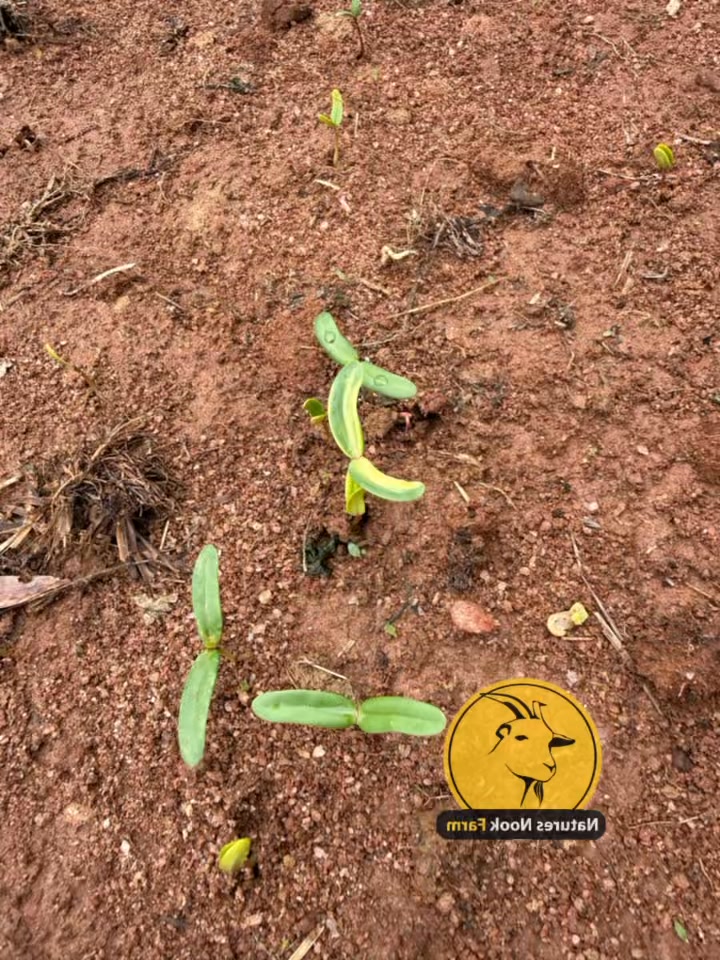
Planted SunHemp 5 days ago in anticipation of the coming rain and it is already germinating😁 The Sericea Lespedeza, Chicory, and Millet patches I planted
Nature’s Nook Farm is in Georgia.
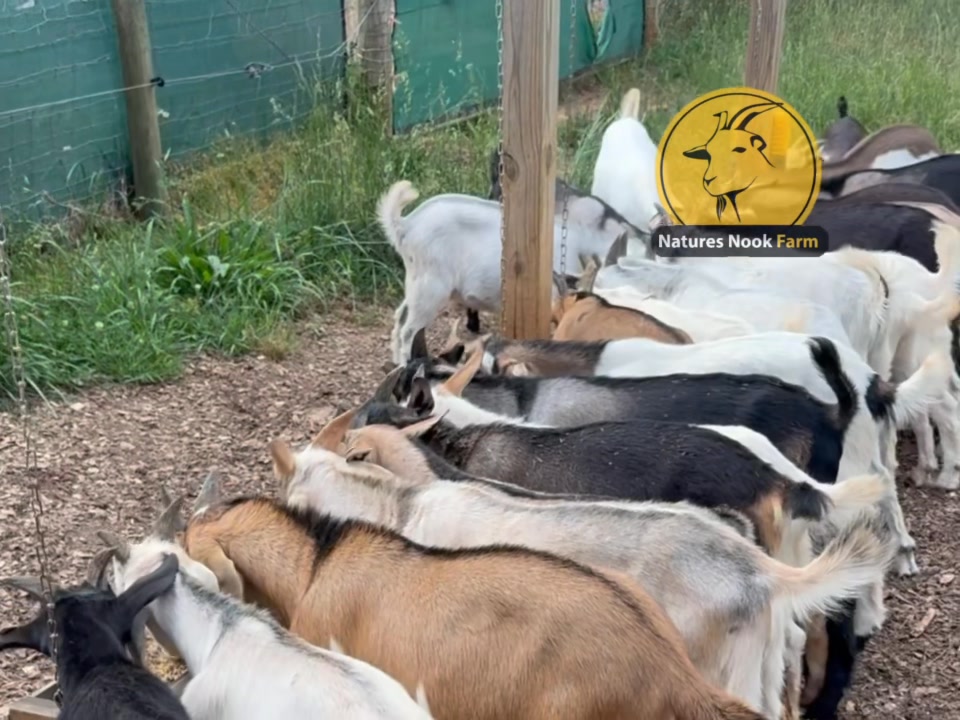
Busy day on the farm. Moved Onyx Jukka (230 lbs) and Tara Bear (165 lbs) into a paddock for some special Fall babies! Moved the