
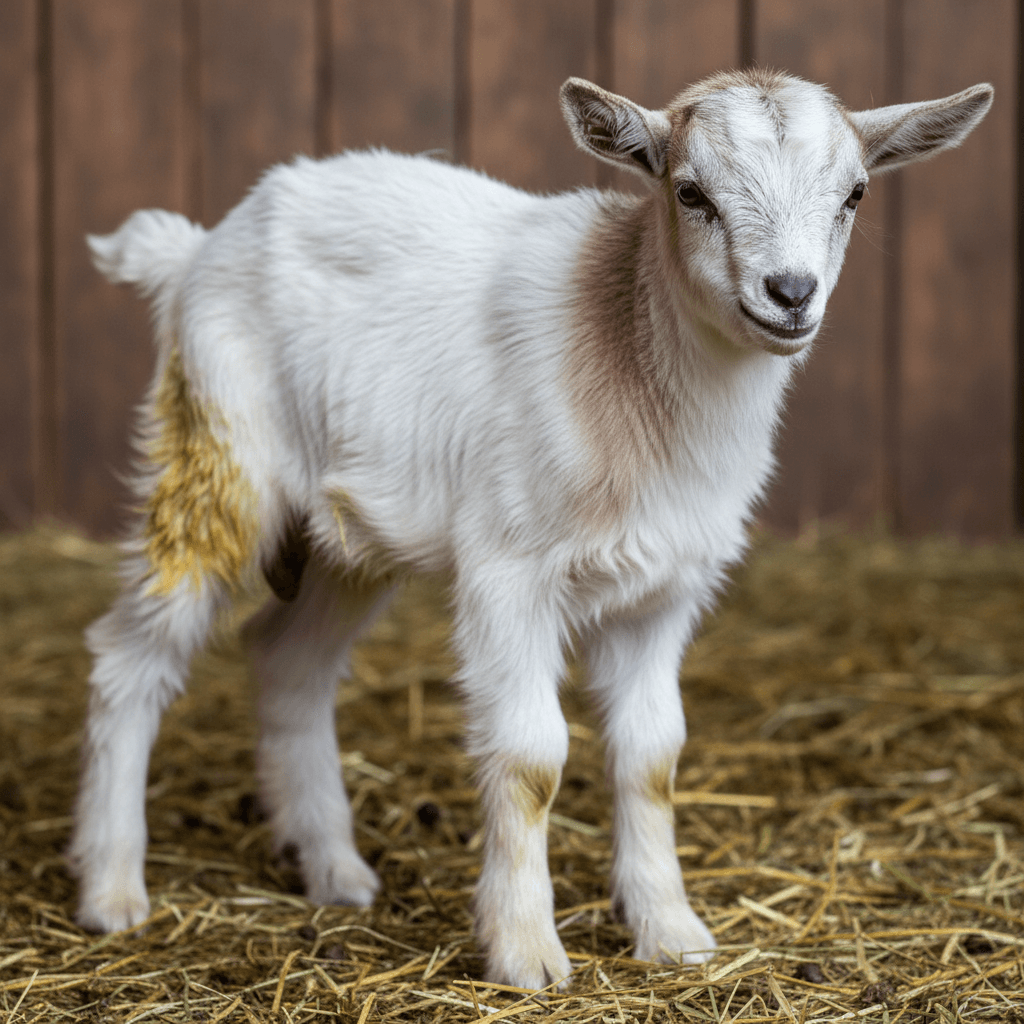
Coccidia in Goats: 10 Simple Ways to Reduce Outbreaks
Coccidia are one of the most common parasite problems facing goat farmers, especially those raising young kids. A serious outbreak can cause diarrhea, poor growth, dehydration, weight loss, and sometimes death.
The good news is that farmers can greatly reduce Coccidia problems through good management.
You probably won’t eliminate Coccidia from your farm. In fact, that shouldn’t be the goal. Instead, concentrate on keeping exposure low enough that young goats can develop resistance without being overwhelmed.
Many of the best prevention methods are surprisingly simple.
What Are Coccidia?
Coccidia are microscopic parasites that live and reproduce in a goat’s intestinal tract. Unlike barber-pole worms, Coccidia are not worms. They are tiny single-celled parasites called protozoa.
Goats pass Coccidia in their manure as microscopic structures called oocysts.
After leaving the goat, these oocysts can become infective. Another goat becomes infected when it swallows them.
That can happen through contaminated feed, water, bedding, soil, feeders, water troughs, or other surfaces.
Because Coccidia spread through manure contamination, farm management plays a major role in controlling them.
How Small Are Coccidia?
Coccidia are incredibly small.
Their oocysts are generally only about 20–30 microns across. For comparison, a typical barber-pole-type strongyle egg is roughly 80–90 microns long.
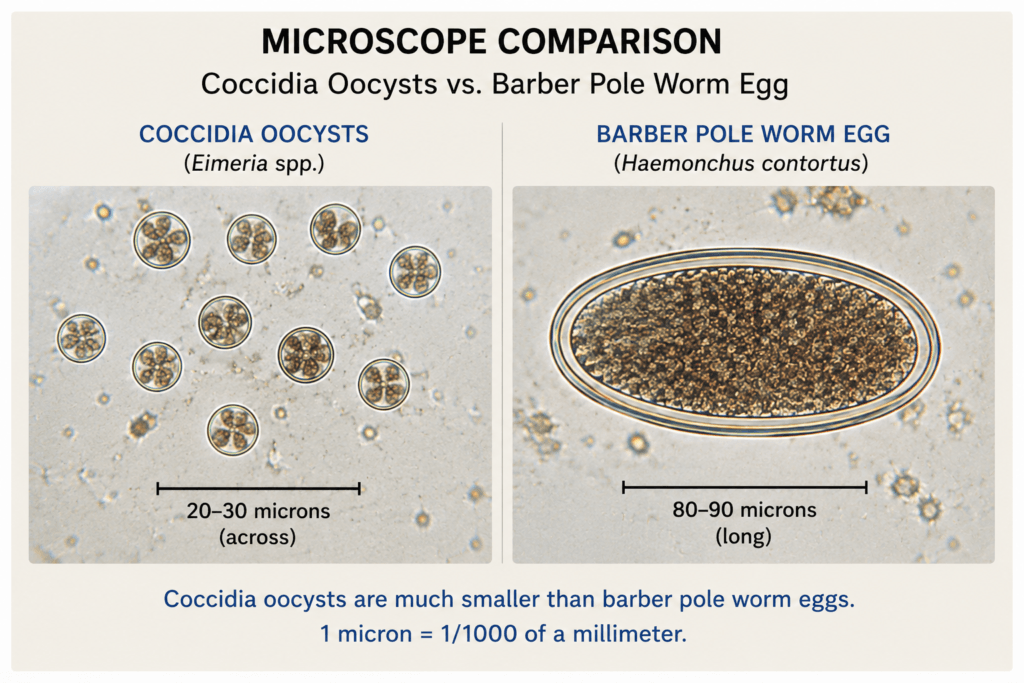
Suggested image alt text: Coccidia oocysts compared with barber pole worm egg under a microscope.
Neither can be seen with the naked eye. Therefore, a feeder, water bucket, bedding area, or patch of ground may look perfectly normal while still containing Coccidia.
Coccidia and Barber-Pole Worms Are Different
Although both parasites are associated with goat manure, they spread differently.
Barber-pole worm eggs leave the goat in manure. The eggs hatch and develop into larvae. Eventually, infective larvae move onto nearby vegetation. A goat becomes infected when it eats those larvae while grazing.
Think of the barber-pole cycle as:
Goat → manure → larvae → grass → goat
Coccidia have a more direct route.
A goat can swallow infective Coccidia from manure-contaminated feed, water, bedding, soil, or other surfaces.
Think of the Coccidia cycle as:
Goat → manure → mouth → goat
This difference helps explain why Coccidia can become a serious problem around barns, feeders, waterers, kidding areas, and crowded pens.
Why Are Coccidia More Dangerous to Kids?
Adult goats commonly carry some Coccidia without appearing sick. Over time, they develop resistance that helps them tolerate normal exposure.
Young kids haven’t developed that resistance.
Meanwhile, kids may be surrounded by adult goats and other kids shedding Coccidia into their environment.
As contamination increases, a kid can swallow large numbers of infective oocysts. Eventually, the parasite challenge can overwhelm the kid’s developing defenses.
That’s when a normal parasite can become a Coccidia outbreak.
Fortunately, farmers can do quite a bit to reduce that exposure.
1. Keep Bedding Clean and Dry
One of the simplest ways to reduce Coccidia is to keep sleeping and kidding areas clean and dry.
Wet bedding mixed with manure creates conditions where contamination can build.
Remove heavily soiled or wet bedding instead of continually covering a wet, manure-filled layer with fresh bedding.
Pay particular attention during extended rainy weather when goats spend more time under shelter.
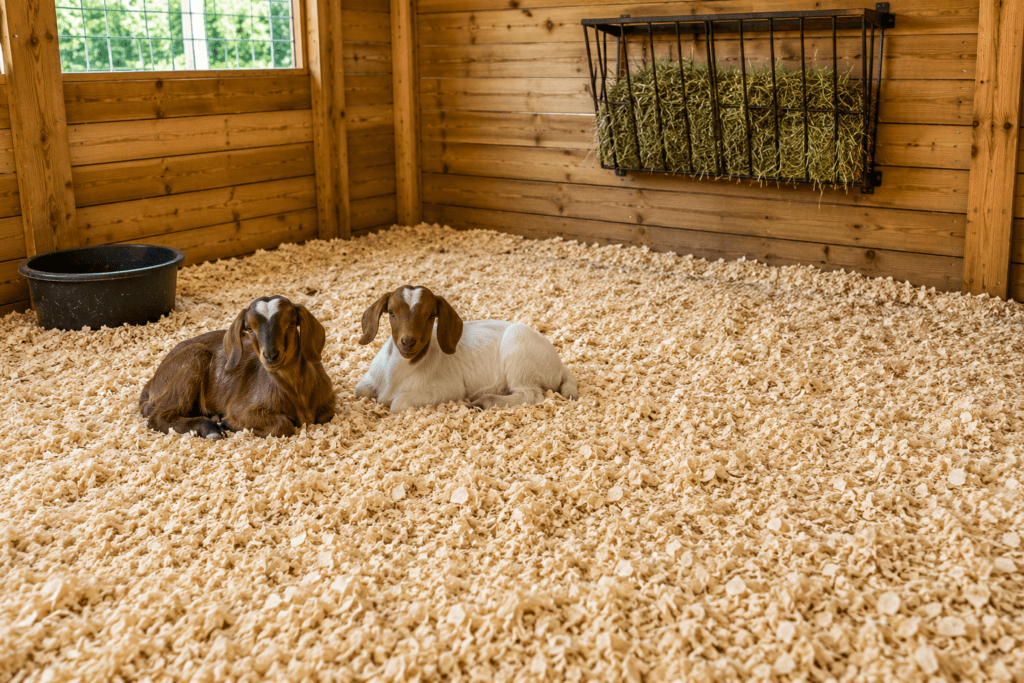
Suggested image alt text: Clean dry goat bedding helps reduce Coccidia exposure in young goats.
The barn doesn’t have to be spotless. This is a goat farm, not an operating room.
The objective is simply to keep manure and moisture from building up.
2. Keep Manure Out of Feed
Feeders should be designed and positioned so goats cannot easily stand in them or defecate into their feed.
The same principle applies to hay.
Keep hay off the ground whenever possible. Once hay becomes heavily contaminated with manure and urine, don’t put it back into the feeder.
Move it to your manure or compost pile instead.
Every time you prevent manure from entering a feeder, you interrupt one possible route for Coccidia to reach another goat.
3. Keep Water Clean
Protecting the water supply is just as important.
Position water buckets and troughs so goats cannot stand in them. Raising water containers slightly can also reduce the amount of mud, bedding, and manure kicked into the water.
Clean dirty troughs instead of simply adding fresh water on top.
A small amount of manure scattered across an acre isn’t the same as manure entering a water trough shared by many goats.
4. Reduce Mud Around High-Traffic Areas
Mud is an often-overlooked part of Coccidia control.
Wet soil holds moisture and becomes mixed with manure. Meanwhile, goats continue walking through the same area.
The worst locations are usually easy to identify:
Hay feeders, waterers, gates, barn entrances, shelters, and shade areas.
These locations receive constant goat traffic and a constant supply of manure.
Improving drainage is one solution. However, drainage projects can be expensive and aren’t practical everywhere.
There is another inexpensive solution.
5. Use Wood Chips to Keep Goat Areas Dry
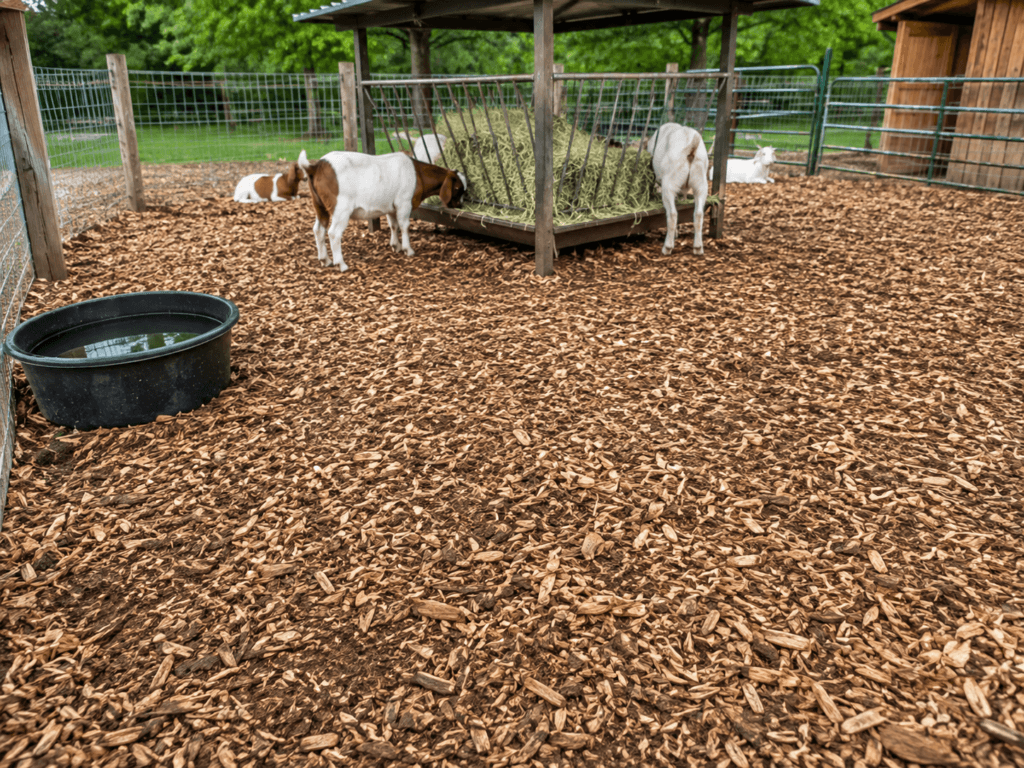
A thick layer of wood chips can dramatically improve muddy, high-traffic goat areas.
Tree-removal and tree-trimming companies generate enormous quantities of chipped wood. They need somewhere to put it, so farmers can sometimes get entire truckloads delivered for little or no cost.
Spread the chips heavily around hay feeders, water troughs, gates, barn entrances, shelters, and other places where goats congregate.
Suggested image alt text: Wood chips covering a high traffic goat area to reduce mud and Coccidia exposure.
Wood chips create a drier walking surface and help separate goats from wet, manure-contaminated soil.
Eventually, the chips will break down and become mixed with manure and soil.
When that happens, scoop up the old material and move it to your manure or compost pile. Then put down another layer of fresh chips.
You have reduced mud while creating another source of useful compost material.
6. Avoid Overcrowding
More goats in a small space means more manure.
More manure means greater opportunity for Coccidia to spread.
This is particularly important with kids.
Give young goats enough space that manure doesn’t accumulate faster than their environment can dry.
Also look for places where goats crowd themselves even when plenty of pasture is available.
For example, 30 goats may have several acres available but spend hours standing around one hay feeder.
Sometimes adding another feeder or water location can dramatically reduce the concentration of animals—and manure—in one spot.
7. Keep Kidding Areas Clean
Give newborn kids a reasonably clean place to enter the world.
Remove heavily contaminated bedding from kidding areas and replace it with clean, dry material.
If several does use the same kidding stall, clean it periodically instead of allowing manure to accumulate throughout the entire kidding season.
You aren’t trying to eliminate every Coccidia oocyst.
You’re simply giving newborn kids a cleaner start.
8. Watch Kids Closely Around Weaning
Weaning can be a high-risk period for Coccidia problems.
Kids may experience several changes at once. Their diet changes, their social group changes, and they may move to a different pasture or pen.
All of that creates stress.
Whenever possible, avoid stacking several major stresses together. For example, try not to combine weaning, transportation, major feed changes, overcrowding, and bad weather at the same time.
Reducing stress helps kids handle the normal parasite challenge already present in their environment.
9. Provide Good Nutrition
Coccidia management isn’t only about controlling the parasite.
It’s also about raising goats capable of handling normal exposure.
Growing kids need adequate nutrition, including good forage, sufficient protein, appropriate minerals, and clean water.
Good nutrition won’t prevent a kid from swallowing Coccidia.
However, a healthy, properly growing kid is generally better prepared to handle parasite exposure than one already struggling nutritionally.
10. Manage Manure Instead of Spreading the Problem
Manure management is another useful tool for reducing parasite exposure.
When cleaning barns, shelters, and feeding areas, consider moving manure and waste hay to a designated manure pile rather than immediately spreading fresh manure across actively grazed goat pasture.
Waste hay is actually beneficial in a manure pile.
The mixture of goat manure + urine + waste hay can make excellent composting material.
Farmers who want a simple system can pile the material and allow it to age.
Those willing to do a little more work can turn the pile occasionally with a tractor. A properly working compost pile generates considerable heat, which helps break down the material and reduce parasite contamination.
Eventually, that former farm waste becomes valuable organic material that can be returned to the soil.
Don’t Try to Eliminate Every Coccidia Organism
One of the biggest mistakes is thinking successful Coccidia management means creating a Coccidia-free farm.
That’s unrealistic.
Adult goats can carry and shed Coccidia without showing signs of disease. Therefore, some exposure is going to occur.
The goal is to prevent the environment from becoming so heavily contaminated that young goats receive an overwhelming dose.
Concentrate your efforts where goats spend the most time:
Feeders, waterers, barns, shelters, gates, kidding areas, and weaning areas.
These small portions of the farm can create a much greater Coccidia challenge than acres of relatively clean pasture.
The Bottom Line on Coccidia
Coccidia may be microscopic, but the problems they cause can be significant.
Fortunately, reducing Coccidia outbreaks doesn’t necessarily require expensive equipment or complicated management.
Walk through your farm and look at it from a young goat’s point of view.
Where is manure accumulating? Where does the ground stay wet? Can goats put their feet in the feeder? Is manure getting into the water? Where do kids crowd together? Which areas remain muddy several days after rain?
Those are the places to start.
Focus on:
Clean bedding. Clean feed. Clean water. Dry ground. Less mud. Less crowding. Good nutrition. Lower stress. Good manure management.
And don’t underestimate something as simple as a load of wood chips.
You probably won’t eliminate Coccidia from your farm.
You don’t need to.
Keep the environment cleaner and drier, reduce heavy exposure, and give young goats the best opportunity to develop their own resistance.
Sometimes good Coccidia management really can be as simple as clean bedding, a well-designed feeder, clean water, and a truckload of wood chips.




Add Comment