
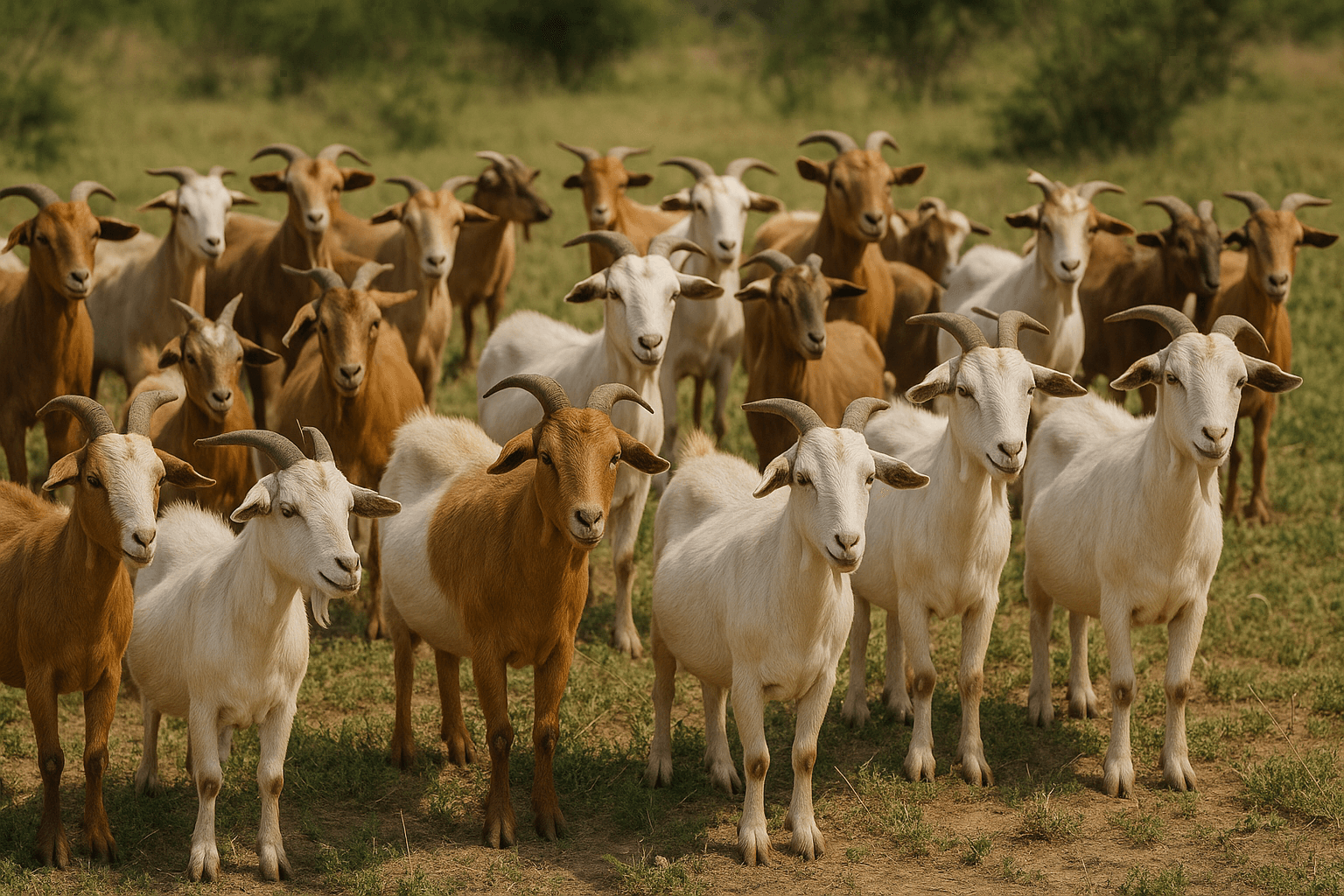
How to Create a Boki Goat Herd: Blending Boer and Kiko Genetics for the Best of Both Worlds
What is a Boki Goat?
A Boki goat is the offspring of a Boer and a Kiko, two of the most productive meat goat breeds in the world. This hybrid isn’t just a catchy name—it represents a powerhouse combination of Boer’s muscular build and fast growth with Kiko’s low-input hardiness, parasite resistance, and maternal excellence. The result is a versatile, vigorous meat goat that thrives in pasture-based systems.
Developing a Boki goat herd is an excellent option for farmers looking to maximize profit while minimizing health interventions and feed costs.
Why Cross Boer and Kiko Goats to Create Boki’s?
The appeal of the Boki goat lies in the strengths of both parent breeds:
- Boer Traits:
- Superior muscling and frame
- High market demand for meat quality
- Calm disposition
- Kiko Traits:
- Strong parasite resistance
- Minimal kidding problems
- Outstanding maternal instinct and survivability
- Boki Advantages:
- Hybrid Vigor: Crossbreeding enhances performance traits such as growth, fertility, and resistance.
- Lower Maintenance: Thanks to the Kiko foundation, Boki’s often require fewer medications and interventions.
- Greater Marketability: Ideal for both commercial meat operations and homestead herds.
Starting With the Right Genetics
Your Boki herd’s success starts with sourcing excellent breeding stock. Use one breed for your does and the other for your sire.
The most common setup:
- Kiko does x Boer buck = Fast-growing kids with low-maintenance dams
For Kiko does, consider established breeders like Nature’s Nook Farm. Their Kikos are performance-tested, pasture-proven, and bred for traits like parasite resistance, sound hooves, and strong mothering—ideal for forming a productive and resilient Boki foundation.
Step-by-Step: Building Your Boki Herd
1. Set Clear Goals
Before crossing Boer and Kiko goats, define your purpose:
- Are you producing meat kids for sale at 90+ lbs?
- Do you want goats that thrive on pasture with minimal input?
- Are you creating a line of Boki breeding stock?
- Do you want faster gains or longer-term sustainability?
These questions will shape your breeding direction and management approach.
2. Source High-Quality Breeders
Select breeding stock with proven genetics:
- Kiko Does from performance-tested lines (Nature’s Nook Farm is a great source)
- Boer Bucks with excellent conformation and documented growth performance
Avoid buying based on price alone. Good genetics yield better growth, survivability, and profit margins.
3. Breeding Age and Strategy
- Minimum Breeding Age for Does: 18 months
- Minimum Weight for Does: 80 pounds
While some breeds can technically breed earlier, waiting until 18 months ensures full skeletal development and maternal maturity, especially important in first-time Kiko-Boer crosses.
- Buck-to-Doe Ratio: One buck per 25–30 does
- Breeding Season: Fall and winter are most common, though Kikos often breed year-round
- Cycle Management: Monitor 18–21 day estrus cycles; marking harnesses help identify successful breeding
4. Kidding and Raising Boki Kids
Kiko does are typically low-maintenance mothers, and this trait often passes on to Boki offspring.
- Kidding Ease: Most Kiko does require little assistance
- Colostrum Intake: Ensure kids nurse within 12 hours
- Vigor: Boki kids tend to be robust and quick to stand
- Weaning Weights: Aim for 40–70 lbs at 90–100 days
Cull kids that show signs of poor growth, hoof problems, or worm susceptibility to improve herd quality over time.
5. Nutrition and Pasture Management
Boki goats perform best with balanced inputs and managed pastures:
- Rotational Grazing: Move goats every 5–10 days to reduce parasite load
- Free-Choice Minerals: Ensure adequate copper and selenium based on local deficiencies
- Feed: Creep feeding can improve growth rates, especially with Boer sires
- Water Access: Always provide clean, fresh water
- Parasite Management: Conduct fecal egg counts before deworming; Boki goats often require less chemical intervention thanks to their Kiko genetics
6. Marketing Your Boki Herd
A well-managed Boki herd has multiple revenue streams:
- Meat Production: Sell kids at weaning or finish them to 90–110 lbs
- Live Animal Sales: Target ethnic markets or meat processors
- Breeding Stock: Market Boki does and bucks to homesteaders and other producers
- Value-Added Options: Consider branded meat cuts, goat sausages, or direct-to-consumer CSA models
Marketing Tips:
- Promote the Boki name to highlight the unique blend of Boer and Kiko genetics
- Use high-quality photos, growth records, and testimonials
- Mention your use of Nature’s Nook Farm Kikos to build buyer trust
7. Improve Over Time
As your herd matures, take your Boki breeding program to the next level:
- Backcrossing: Breed Boki does back to Kiko for more resilience, or to Boer for more muscle
- Performance Testing: Track weights, parasite loads, and kidding success
- Selective Retention: Only keep kids that meet your ideal profile—strong, fast-growing, and parasite-tolerant
Final Thoughts: Boki Goats for the Win
Creating a Boki goat herd is a smart move for producers seeking the sweet spot between high meat yield and low management input. When you start with quality genetics—like the performance-bred Kikos from Nature’s Nook Farm—and pair them with strong Boer bucks, you’re crafting a line of goats built for real-world conditions and modern market demands.
Whether you’re selling meat or breeding stock, Boki goats are a powerful hybrid choice that delivers where it counts: on the scale, in the pasture, and at the bank.




Add Comment