
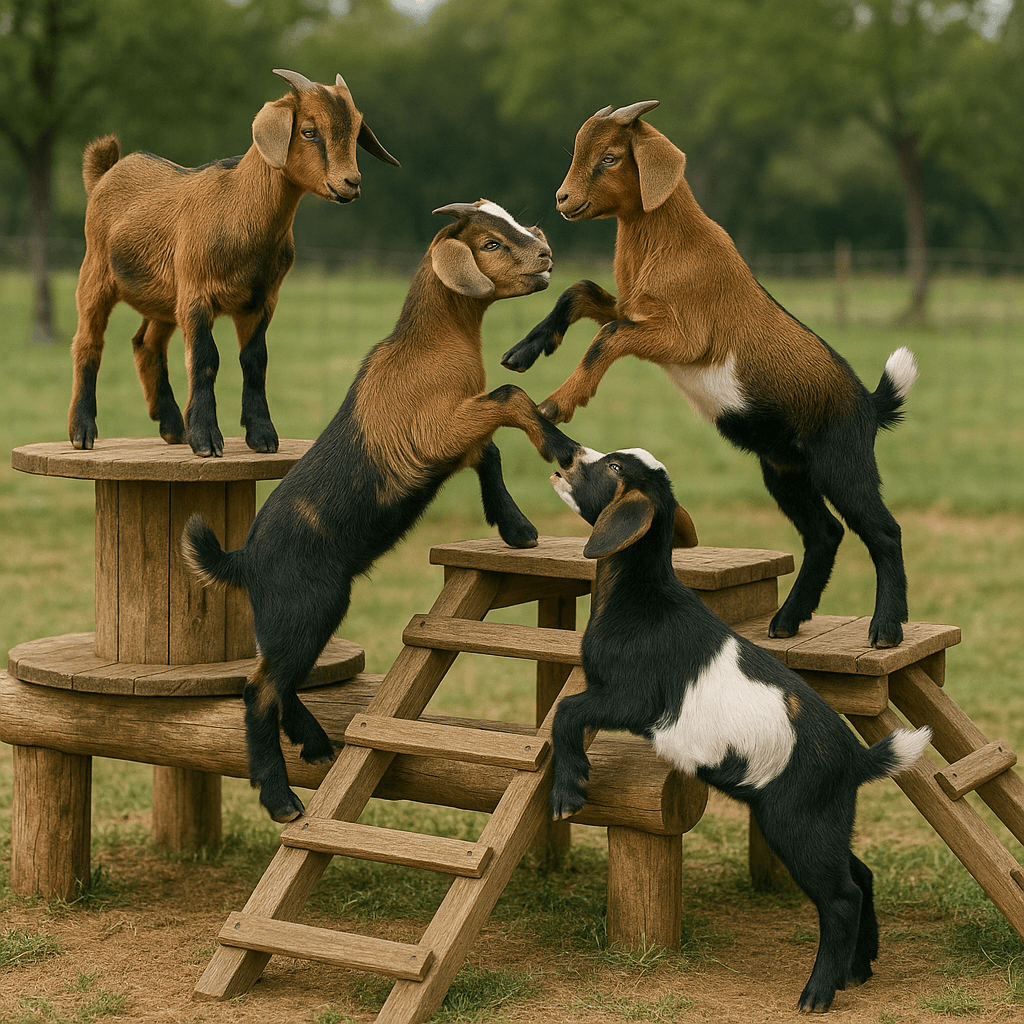
Build and they will play
If you’ve ever watched goats for more than five minutes, you know one thing: they love to climb, jump, and explore. These curious, athletic animals need mental and physical stimulation to stay happy and healthy. That’s where a goat playscape comes in.
A goat playscape is more than just a collection of junk in the pasture—it’s an intentional, enriching environment designed to encourage natural behavior, prevent boredom, and promote herd harmony. Done right, it can even reduce stress-related behaviors like pacing, aggression, and excessive vocalizing.
Whether you’re raising a few backyard goats or managing a commercial Kiko operation, here’s how to design a fun and functional goat playscape—plus a few pitfalls to avoid.
Why Build a Goat Playscape?
Goats aren’t just livestock—they’re intelligent, playful, and full of personality. A good goat playscape:
- Encourages exercise, which reduces obesity and improves hoof and joint health
- Helps kids (and adults) burn off energy in safe, controlled ways
- Reduces destructive boredom behaviors like chewing fences or breaking out
- Improves herd socialization and hierarchy in a natural setting
- Makes for great photos and visitor entertainment!
Plus, a well-built goat playscape can actually save you time and money in vet bills and fencing repairs.
Essential Elements of a Goat Playscape
When designing your goat playscape, think about variety, height, and safety. Use sturdy, weather-resistant materials and arrange structures with climbing, balancing, and hiding in mind.
1. Climbing Platforms
Goats love to be on top of things. Wooden spools, cable reels, large rocks, and tiered wooden pallets make excellent climbing platforms. Be sure they’re stable and won’t tip or shift under hoof.
Do: Anchor platforms securely, and vary the height to challenge goats of all ages.
Don’t: Stack wobbly pallets or use slick surfaces that can cause injury.
2. Bridges and Walkways
Connecting platforms with balance beams or wide planks turns your goat playscape into a mini jungle gym. Use heavy-duty lumber with grip (non-slip paint or rubber treads) for safety.
Do: Build bridges low at first while goats learn the ropes.
Don’t: Place walkways too close to fences—your acrobats may use them as escape ramps.
3. Tunnels and Hideouts
Goats enjoy cozy spaces to hide and rest. Use large plastic culverts, lean-tos, or crawl-through hay bale tunnels.
Do: Ensure hideouts are big enough for full-grown goats to enter and turn around safely.
Don’t: Use anything that can trap horns or block airflow.
4. Interactive Toys
Hanging objects like rubber balls, ropes, or treat-dispensing feeders add interest. Just make sure they’re designed for livestock and are free of choking hazards.
Do: Rotate toys regularly to keep goats engaged.
Don’t: Use children’s toys or items with small parts.
5. Natural Elements
Logs, tree stumps, and dirt mounds are low-cost and high-value additions to any goat playscape. They appeal to goats’ instincts and are biodegradable.
Do: Check logs for insects or rot before placing them.
Don’t: Use toxic tree species like cherry or yew.
DIY Goat Playscape on a Budget
You don’t need to spend a fortune to build a fantastic goat playscape. Many materials can be found for free or cheap:
- Wooden cable spools from utility companies
- Pallets (heat-treated only) for platforms or walls
- Used tires partially buried for bounce and grip
- Scrap lumber for building custom ramps and towers
- Large plastic barrels for tunnels or rolling toys
Just make sure all materials are clean, free of nails or staples, and safe for chewing.
Do’s and Don’ts Recap
✅ DO:
- Use weatherproof, sturdy materials
- Provide levels and variety
- Anchor everything securely
- Keep safety first (no sharp edges or unstable builds)
- Rotate elements to prevent boredom
- Observe goat behavior and adjust as needed
❌ DON’T:
- Place structures near fences or barns (escape artists!)
- Stack pallets or barrels that could tip
- Use treated wood that could be toxic
- Forget about horn clearance in tunnels or platforms
- Assume all goats will use the playscape the same way
Safety Tips for Your Goat Playscape
As fun as a goat playscape is, safety is key. Check all equipment weekly, especially after storms or heavy use. Watch for loose nails, splinters, and sharp edges. Replace broken items promptly.
If you have horned goats, especially bucks, allow extra space in tunnels and walkways. Avoid tight corners where goats can trap one another during headbutting sessions.
And always supervise new additions to the playscape. Some goats are natural climbers; others need encouragement and time to explore.
Final Thoughts
A great goat playscape blends creativity, function, and fun. Whether you build a castle from pallets, a tunnel maze from barrels, or a hilltop perch from logs, your goats will thank you with fewer escape attempts and more happy hops.
Remember: the best goat playscape is one that fits your space, your goats, and your budget. Get creative, have fun, and let your herd lead the way.
Have your own goat playscape ideas or photos? Share them with us at Nature’s Nook Farm and inspire others to raise goats with joy and imagination.




Add Comment